
Ready to debate?
Want to express your views, persuade others and meet interesting people along the way?
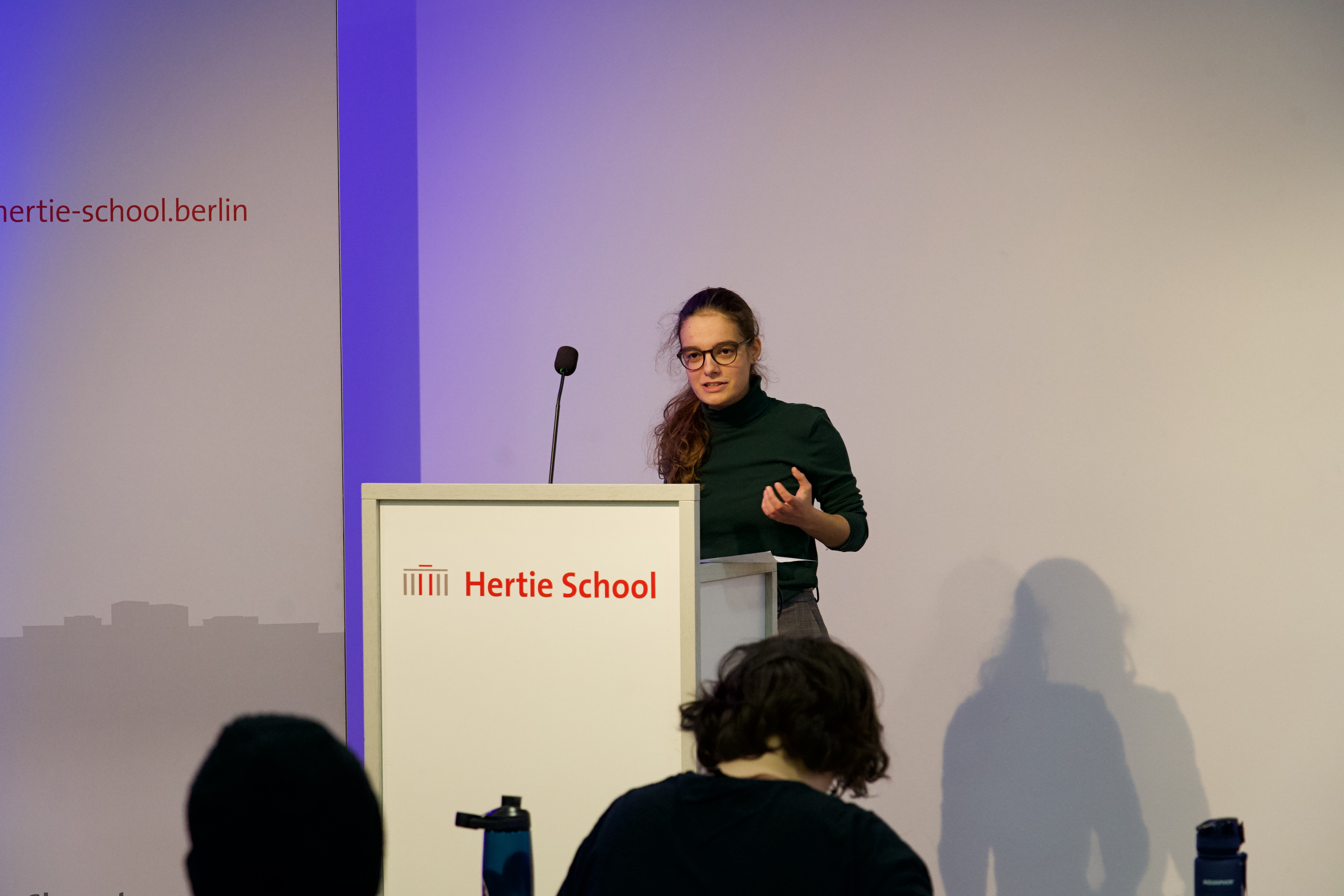
At the Berlin Debating Union, we discuss current topics in politics, society and culture. Sometimes it is relaxed and fun, sometimes competitive. You learn to speak without a script, argue persuasively and present yourself confidently. Above all, you meet interesting students and have a great time together.
Introductory programme
Next introductory programme: 13 October–15 November 2026
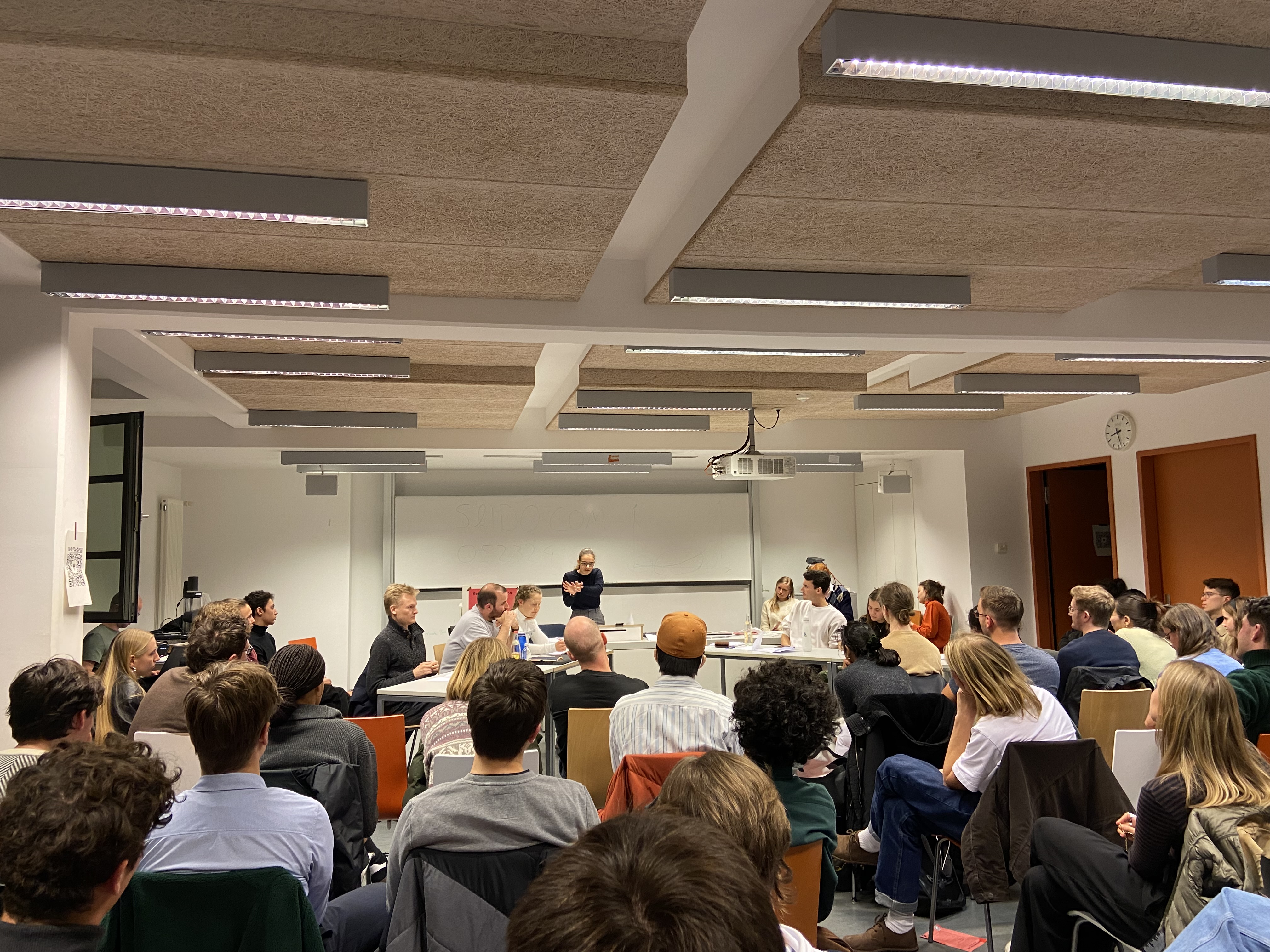
Every year, at the start of the winter semester, the BDU runs an introductory programme. On the first Tuesday of the semester, we begin with a demonstration debate to introduce student debating. In the following weeks, we offer workshops on public speaking and argumentation in German and English, followed by debates in small groups. The programme ends with a small, optional tournament.
You can join club night at any time, even if you missed the first sessions or the entire introductory programme.
Public demonstration debate
13.10.2026 followed by a get-together
“Should social media be banned for under-16s?”
Humboldt University Berlin, Dorotheenstr. 24, room 1.601
Free, no registration required
Workshop series
All workshops take place at Humboldt University, Dorotheenstraße 24, room 1.601.
20.10.2026
7 pm
How does a debate work?
Debate: “This House would legalise all drugs.”
27.10.2026
7 pm
How do I develop an argument?
Debate: “This House would introduce a universal basic income.”
03.11.2026
7 pm
How do I find arguments?
Debate: “Assuming it were possible, This House would give soldiers a pill that makes them forget their wartime experiences.”
10.11.2026
7 pm
How do I weigh arguments?
Debate: “This House regrets the development of facial recognition systems.”
15.11.2026
All day
Berliner Bärchen tournament
In German. Participation in the final tournament is optional.
The debate
We usually debate in British Parliamentary Style (BPS), which draws on the debating tradition of the British House of Commons. The government presents a proposal that the opposition challenges. The aim is to explore a wide range of arguments: both sides seek the strongest reasons for their position and engage with the clash between them. There is no vote, and any compromise comes after the debate. Teams on the same side also compete with each other: as in a coalition government, each team needs to make its own distinct contribution.
Teams
Each debate features four teams of two: two supporting the motion and two opposing it. To take part, sign up at the lectern at the start of the evening, either as a team or individually.
Motion
The motion is announced at the start of club night. You then have 15 minutes to prepare your arguments. Electronic tools, Google and AI are not allowed. Our motions cover a wide range of topics, including politics, culture, international relations, ethics, economics, philosophy and much more.
Speeches
Each speaker takes a turn to present their arguments in a seven-minute speech. Questions from the opposing side are encouraged to keep speeches interactive. Speakers decide whether and when to accept them. Questions are not allowed during protected time — the first and last minute — so speakers can introduce and summarise their arguments. A bell or a clap signals the time: one signal at 1:00 and 6:00, and two at the end of the speech. Speakers are not cut off, but going significantly over time costs points.
Feedback
After the debate, judges give speakers brief feedback, an assessment and advice for future debates. In British Parliamentary Style, judging focuses entirely on the substance of the arguments. We also debate in Open Parliamentary Debate (“OPD”), where rhetorical criteria play a greater role.
You can find more information about the formats here or on the website of the association of university debating clubs (VDCH).
FAQ
Do I need to be a member to take part?
No! Our Tuesday club nights and monthly socials are open to anyone interested. You do not need to be or become a member to attend.
If you want to represent the BDU at national or international tournaments, you should become a member. Membership costs €30 per year.
Can I come even if I am not a university student?
Yes! Our club also includes apprentices, school students and working professionals. We welcome everyone who wants to debate, whatever their background.
Does debating at the BDU cost anything?
No! Our club nights are completely free. You do not need to be a member or pay anything. Just come along and join in as often and for as long as you like.
If you later want to represent the BDU at national or international tournaments, you should become a member. Membership costs €30 per year. If that is financially difficult for you, we will find a solution together.
Can I join if I missed the introductory programme?
Yes, of course! Even if you missed our introductory programme in early October, you can start debating at any time. We are happy to explain the rules at club night.
Do I need any prior knowledge?
No, none at all! We explain the rules and how everything works at club night. You do not need to prepare for the topic either. Everyone receives the motion just 15 minutes before the debate and starts on the same footing.
Which languages do you debate in?
At club night, we debate in German and English.
What should I bring to club night?
Bring a pen, a few sheets of paper and a stopwatch, for example on your phone.
What topics do you debate?
Our topics are very varied: from speed limits to the death penalty, party discipline to optimism about progress, zoos to sugar taxes. We debate politics, culture, international relations, ethics, economics, philosophy, sport, society and much more.
Is it a problem if I do not have much time?
No! You decide whether to join us every week or drop by once every few months. Both are welcome.
What will I gain from debating?
Debating has many benefits: it helps you build stronger arguments and organise your thoughts. You practise speaking without a script and presenting yourself confidently. Debating broadens your horizons by introducing you to social issues and questions you might not otherwise encounter. Taking different positions also helps you understand the other side. At the club, you meet a friendly and diverse group of like-minded people from different subjects and years of study.
Above all, debating is a lot of fun!
Join us at club night.
You are always welcome, even outside the introductory programme.